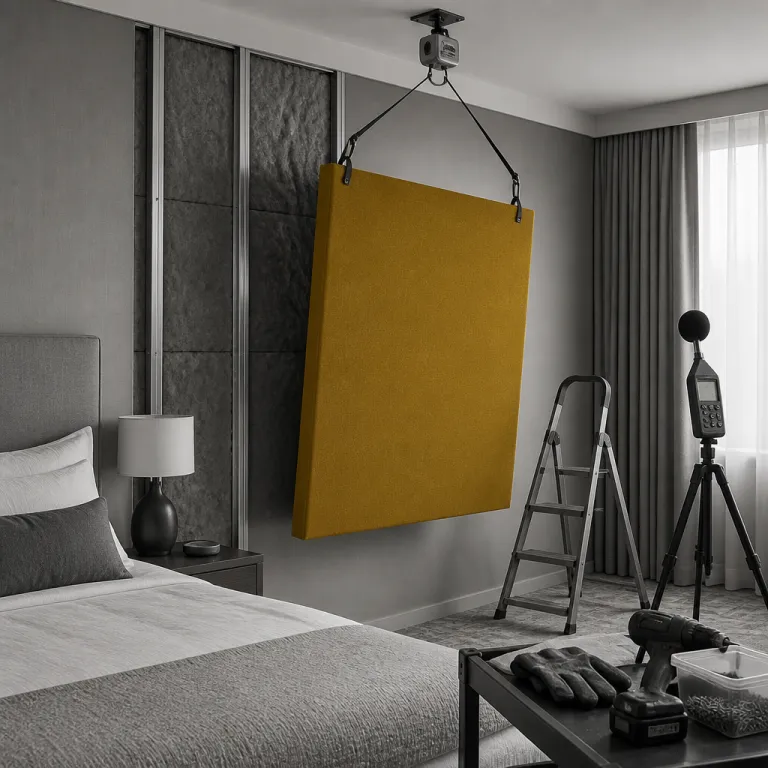
Silence as a luxury amenity in modern hospitality
In high end hospitality, silence is no longer a pleasant surprise. It is a core part of hotel acoustic design and soundproofing strategy, shaping how quickly you decompress after a flight. When a hotel invests in serious noise control, you feel it before you see the thread count or the marble in the lobby.
Noise is consistently the number one complaint in hotel reviews, and yet many hotels still treat acoustics as a technical afterthought rather than a design driver. A Cornell Center for Hospitality Research analysis of online feedback (Forno & Nunes, 2016, “Complaints and Disappointments in Hotels,” Cornell Hospitality Report) found that noise issues appeared in more than 30% of negative guest comments. The most sophisticated properties now brief hotel architects, acoustic consultants and interior designers together, aligning visual design, acoustics and operations so guests enjoy a coherent sensory story from lobby to guest rooms. This is where acoustic performance becomes a brand signature, not just a line item in construction costs.
For you as a guest, the difference between a well insulated, soundproof hotel and a visually stunning but noisy one is immediate. Corridor noise, elevator chimes and plumbing sound waves either fade into the background or invade your sleep, your calls and your sense of privacy. When hotel soundproofing is handled properly, you register the calm atmosphere, the controlled sound in public areas and the way hotel rooms feel insulated from the city without feeling sealed off.
Acoustic design in hotels is about more than thick walls and heavy doors. It is a layered strategy that uses mass loaded materials to block noise transmission, acoustic panels and wall panels to absorb sound, and ceiling treatments to tune how sound moves through spaces. In many upscale properties, designers now target background noise levels of around 30–35 dB(A) in guest rooms at night, a range associated with better sleep quality in building acoustics guidance such as the World Health Organization’s “Night Noise Guidelines for Europe” (WHO, 2009). The aim is to create quieter rooms and social areas where guests enjoy conversation without strain, while the hotel lobby still carries a gentle, curated buzz.
Industry data underlines why this matters for every guest experience. A J.D. Power North America Hotel Guest Satisfaction Index Study (for example, the 2019 edition) reported that guests disturbed by noise were up to 30% less likely to return to the same hotel brand, a pattern echoed across multiple years of the survey. As one expert summary puts it, “Noise affects guest satisfaction” and “It enhances guest comfort by reducing noise.”
How acoustic engineering shapes what you feel in a hotel lobby
Walk into a hotel lobby and your ears judge the space before your eyes do. The balance between background sound, human voices and mechanical noise tells you whether this is a place for quiet work, social energy or late night arrivals. Thoughtful acoustic planning and soundproofing for the guest experience starts right here, where sound design signals the property’s intent.
In well considered hotels, acoustic solutions are integrated into the architecture rather than slapped on as afterthought panels. You might notice soft ceiling treatments that absorb sound waves, or you might simply feel that the lobby atmosphere is calm even when every seat is taken. Behind that ease, acoustic consultants have modelled how sound travels through volumes, how walls and ceilings reflect or absorb noise, and how to reduce noise from check in queues, bar service and luggage rolling across stone floors.
For business leisure travellers, this first impression matters because the lobby often doubles as an office. You want hospitality spaces where you can take a quick call without broadcasting it to every table, and where guests enjoy a sense of privacy even in open areas. Properties that understand this will use acoustic panels disguised as art, wall panels wrapped in textiles and strategic furniture placement to create quieter pockets within the hotel lobby.
Sound is not always the enemy; it can be a design feature when handled with precision. Some hotels use gentle water features or low level playlists to mask intermittent noise, shaping acoustics so that individual conversations blur into a comfortable sound field. A strong acoustic concept for shared spaces does not aim for total silence in public zones, but for controlled sound that flatters the room and calms the nervous system.
If you want to read a space quickly, pay attention to how it sounds as much as how it looks. Our guide to what hotel design tells you before the staff say a word pairs visual cues with acoustic clues, helping you choose hotels where the lobby is not just a backdrop but a finely tuned instrument.
Inside the walls: what makes a truly soundproof hotel room
The real test of any hotel’s acoustic design and noise control strategy comes when you close the door of your room. At that moment, the entire promise of quiet luxury rests on what is hidden inside the walls, ceilings and floors. For business travellers extending a trip into leisure, this is where a hotel either supports recovery or sabotages it.
Effective hotel soundproofing starts with mass and separation. High performing hotel rooms use mass loaded barriers inside walls to block noise transmission, double or triple glazing to tame city sound, and sometimes floating floors to decouple impact noise from footsteps or rolling suitcases. When hotel architects and acoustic engineers collaborate early, they can align structural choices with interior design so that acoustic performance is baked in rather than patched later with cosmetic panels.
Inside guest rooms, the goal is to absorb sound and control reflections, not to create a deadened studio. Upholstered headboards, thick curtains, fitted carpets or high density rugs and discreet acoustic panels all help reduce noise from adjacent rooms and corridors. Ceiling treatments can be surprisingly important, because hard ceilings bounce sound waves back into the space, while treated ceilings help guests enjoy softer, more intimate acoustics even in compact hotel rooms.
For families or colleagues sharing connecting rooms, acoustic privacy becomes a non negotiable comfort factor. Smart hotels specify solid core doors with proper seals, use wall panels between rooms that both block and absorb sound, and pay attention to how plumbing stacks and HVAC systems run through the building. When these details are right, you feel a strong sense of privacy even when the hotel is full, and you can work, sleep or unwind without hearing every neighbour’s routine.
Noise control also matters for daytime rest, especially after long haul flights or late arrivals. Properties that cater to global travellers often zone quieter guest rooms away from service cores and event areas, combining layout strategy with technical acoustic solutions. For more on how thoughtful design supports different travel rhythms, our feature on family friendly hotels with thoughtful design shows how acoustics can serve both children and adults without compromise.
Active sound masking versus passive insulation: what guests actually hear
Not all quiet feels the same, and understanding why helps you choose the right hotel for your trip. Broadly, you will encounter two approaches to acoustic comfort in hotels: passive insulation that blocks noise, and active sound masking that adds controlled sound to cover what remains. The most comfortable properties use a calibrated mix of both.
Passive strategies rely on materials and construction to reduce noise at the source. Thick masonry walls, mass loaded vinyl layers, insulated doors and carefully detailed windows all work together to reduce noise transmission between rooms and from outside. When combined with acoustic panels, wall panels and ceiling treatments that absorb sound inside the space, these measures create quieter hotel rooms where guests enjoy natural silence rather than electronic masking.
Active sound masking introduces a low level, neutral sound into spaces to make intrusive noises less noticeable. Some hotels use white noise systems in corridors or open plan work areas, shaping acoustics so that individual footsteps or conversations blend into a consistent background. In guest rooms, a few properties provide dedicated sound machines, giving each guest control over how much sound they want to absorb from the environment and how they manage their own guest experience.
For business travellers, the distinction matters because different stays demand different acoustic solutions. On a video call heavy trip, you may prefer a soundproof hotel with strong passive construction so your voice does not leak into adjacent rooms, while on a quick overnight you might accept more ambient sound if the bed is excellent and the atmosphere relaxed. Either way, the best hotels are transparent about their approach and design their spaces so that guests enjoy predictable, controllable acoustics.
When you read property descriptions, look for clues beyond vague promises of quiet. References to acoustic consultants, triple glazed windows, insulated walls and ceilings and specific measures to reduce noise from elevators or event areas usually signal a serious commitment. For stays where rest is paramount, such as mountain retreats or wellness weekends, our curated list of refined lodging experiences in naturally quiet destinations pairs strong construction with landscapes where the loudest sound is often the wind.
How to read between the lines when booking for acoustic comfort
Most booking engines still foreground square metres, views and amenities, leaving acoustics buried in the fine print or guest comments. Yet for many travellers, the real luxury is waking up rested because the hotel’s sound design and noise control actually work. With a little attention, you can decode how a property handles sound before you commit.
Start by scanning reviews specifically for mentions of noise, not just overall scores. When multiple guests mention thin walls, hallway noise or disruptive sound from the lobby or bar, assume the hotel soundproofing is weak and that no amount of acoustic panels in public areas will fully compensate. Conversely, repeated praise for quiet rooms, peaceful atmosphere and strong sense of privacy usually reflects real investment in walls, ceilings, doors and windows rather than luck.
Next, read the hotel’s own language with a critical ear. Phrases like “inner courtyard rooms,” “floors reserved for business guests” or “rooms located away from elevators” often signal a deliberate strategy to create quieter zones within the building. If the property mentions mass loaded materials, acoustic solutions, ceiling treatments or specific efforts to reduce noise transmission between guest rooms, that is a strong indicator that acoustic performance has been considered from the design phase.
Finally, do not hesitate to make precise requests when you book. Ask for hotel rooms away from service areas, event spaces and mechanical rooms, and mention that acoustic privacy is a priority for calls or rest. Hotels that take sound seriously will understand the request immediately, and their équipe at the front desk will often know which rooms and spaces consistently deliver the calm atmosphere that discerning guests enjoy.
Behind the scenes, the most forward thinking hotels now involve acoustic consultants from the earliest planning stages, using acoustic modelling software and sound level measurements to guide decisions. Their goal is simple yet demanding: minimize noise transfer, enhance privacy and increase positive reviews by ensuring that what guests hear, most of the time, is nothing at all.
FAQ
Why is acoustic design important in hotels?
Acoustic design is important in hotels because it directly affects how well you sleep, work and relax during a stay. By controlling noise transmission through walls, ceilings and doors, hotels can reduce noise from corridors, adjacent rooms and mechanical systems. As the expert dataset states, “Why is acoustic design important in hotels?” and “It enhances guest comfort by reducing noise.”
How can hotels improve room soundproofing?
Hotels can improve room soundproofing by combining heavier construction with careful detailing. That means using mass loaded barriers inside walls, sealing door gaps, specifying solid core doors and installing acoustic panels or wall panels to absorb sound within guest rooms. Attention to ceiling treatments, window quality and the routing of plumbing and HVAC systems also helps reduce noise transmission between rooms.
What are the most common noise sources in hotels?
The most common noise sources in hotels are corridor conversations, doors closing, footsteps from rooms above and mechanical systems such as elevators or air conditioning. External traffic or nightlife can also generate significant sound if windows are not well insulated. Understanding these sources allows hotel architects and acoustic consultants to design targeted acoustic solutions that protect the guest experience.
What should I ask for when booking a quiet hotel room?
When booking, request a room away from elevators, ice machines and service areas, ideally on a higher floor and facing an inner courtyard rather than a busy street. Mention that acoustic privacy is important for sleep or work, and ask whether the hotel has specific quiet floors or rooms with enhanced soundproofing. If reviews mention noise, call the property directly to discuss which room types and locations create quieter stays for guests.
Can white noise machines really help in noisy hotels?
White noise machines can help mask intermittent sounds such as doors closing or distant voices, making them less disruptive to sleep. They do not replace proper hotel soundproofing, but they can improve comfort when construction is less than ideal or when external noise is unavoidable. Some hotels now provide sound machines in guest rooms as part of a broader acoustic comfort and sound masking strategy.